Filtering Out Misconceptions About Water Treatment
Your family’s health is important to you, which is why you care about the quality of your home’s water. But how do you know what to believe when there is so much conflicting information out there?
You’ve probably heard people claim that bottled water is better than filtered water, or that all filters are the same. Some even argue that if your tap water meets regulations, it must be safe. These misconceptions can prevent you from making smart decisions for your home, your health, and your budget.
Let’s cut through the confusion. Whether you’re already using a water filtration system for your home or considering one for the first time, understanding what’s true and what’s not can help you get the most out of your investment.
Myth #1: If Water Meets Government Standards, It’s Safe Enough
This is one of the most common misconceptions, and one of the most dangerous. Yes, the Environmental Protection Agency (EPA) monitors municipal water supplies and sets limits on how much of a substance is permitted in drinking water. However, you may have concerns about the safety of those limits. Consuming water with contaminants such as PFAS, chlorine byproducts, and lead, can make people uncomfortable.
Your tap water might meet the minimum legal requirements, but it doesn’t guarantee it’s free of substances that could affect your health over time. A filtration system lets you take control and go beyond the minimum requirements, ensuring the water you and your family drink, cook with, and bathe in is truly safe.
Myth #2: All Water Filters Work the Same Way
Not all filters are created equal, and believing otherwise can lead you to choose the wrong system for your needs. Some filters are designed to improve taste, while others are built to eliminate serious health threats. If you install a basic carbon filter thinking it will remove heavy metals or fluoride, you’re going to be disappointed.
You need to understand what’s in your water to make the right choice. For example, a reverse osmosis (RO) system is excellent for removing dissolved solids, bacteria, and PFAS, but may strip beneficial minerals if not paired with a remineralizer. Activated carbon filters, on the other hand, are great for improving taste and removing chlorine, but won’t tackle dissolved lead or arsenic.
The right filtration system is always the one tailored to your water supply. That’s why working with a water treatment company in your area is essential to selecting the best system for your home. A professional will help match the technology to the contaminants you want to eliminate.
Myth #3: Bottled Water Is Cleaner and Safer Than Tap Water
Many people concerned about the water they drink turn to bottled water, thinking it’s safer. But bottled water isn’t necessarily purer or better regulated than tap water. In fact, about 25% of bottled water comes from the tap, and some brands don’t even filter it. Worse, bottled water often contains microplastics and lacks the transparency of local water utilities or certified filter systems.
In addition to health concerns, bottled water creates environmental waste and recurring costs that add up fast. By investing in a home filtration system, you get peace of mind, cleaner water, and a dramatically reduced carbon footprint, all without the endless expense of plastic bottles.
Myth #4: Water Filtration Systems Are Too Expensive or Hard to Maintain
Yes, some high-end filtration systems can be costly, but many affordable options are available that offer powerful protection without breaking the bank. Systems like under-sink RO units or whole-house filters often pay for themselves with what you save on bottled water or appliance repairs.
As for maintenance? It’s usually simpler than people assume. Most filters need replacement every six months to a year, and modern systems often include alerts to tell you when it’s time. Plus, if you work with a local water treatment company, they can handle installation and offer maintenance plans that keep your system running efficiently with minimal effort from you.
When you think long-term, the cost of filtration is an investment in your family’s health, not just a line item on your utility bill.
Myth #5: You Only Need to Filter Drinking Water
Filtering drinking water is a good start, but it’s not the whole picture. You also use water when you shower, cook, brush your teeth, and clean. When unfiltered water flows through your plumbing, it can cause scale buildup in pipes and appliances, reduce the lifespan of your fixtures, and even affect your skin and hair.
If your water contains chlorine or chloramines, these can become airborne during showers, exposing you to chemical vapors. Likewise, hard water can dry out your skin, dull your hair, and leave soap residue behind. Installing a whole-house filtration system helps ensure that every drop of water entering your home is cleaner, gentler, and more effective at doing its job.
Myth #6: You Don’t Need a Filter If You Have a Water Softener
Water softeners and water filters serve different purposes. A softener removes calcium and magnesium, minerals responsible for hard water. It won’t address chemical contaminants, heavy metals, or pathogens, though.
If you rely on a water softener alone, you’re missing a critical layer of protection. For truly clean, healthy water, you need a softener to prevent scale and protect your plumbing and a filter to eliminate harmful substances. In many cases, combining these systems provides the best results for both your health and your home.
What You Can Do to Make Informed Choices
To protect yourself from marketing myths and get real results, start by testing your water. Knowing what’s in your tap water allows you to choose a system that matches your specific needs. Then, work with a trusted local expert who can help you navigate the range of filtration options, from point-of-use solutions like RO systems to whole-house filters that offer total coverage.
Finally, think of water filtration as a proactive step. Clean water is fundamental to your health, comfort, and peace of mind. Instead of reacting to concerns or relying on guesswork, you can take control by investing in proven solutions that deliver exactly what your household needs.
Understanding the Facts
Misinformation about water filtration is everywhere. But when you dig into the facts, it’s clear that modern filtration systems are not just a luxury but a necessity in today’s world. From improving the taste of your water to protecting against long-term health risks, a properly chosen and maintained system offers real, measurable benefits.
You don’t have to settle for “good enough” when it comes to the water flowing through your home. By filtering out the misconceptions and focusing on the truth, you can make confident decisions that support the health of your family and the efficiency of your home.
Video
Infographic
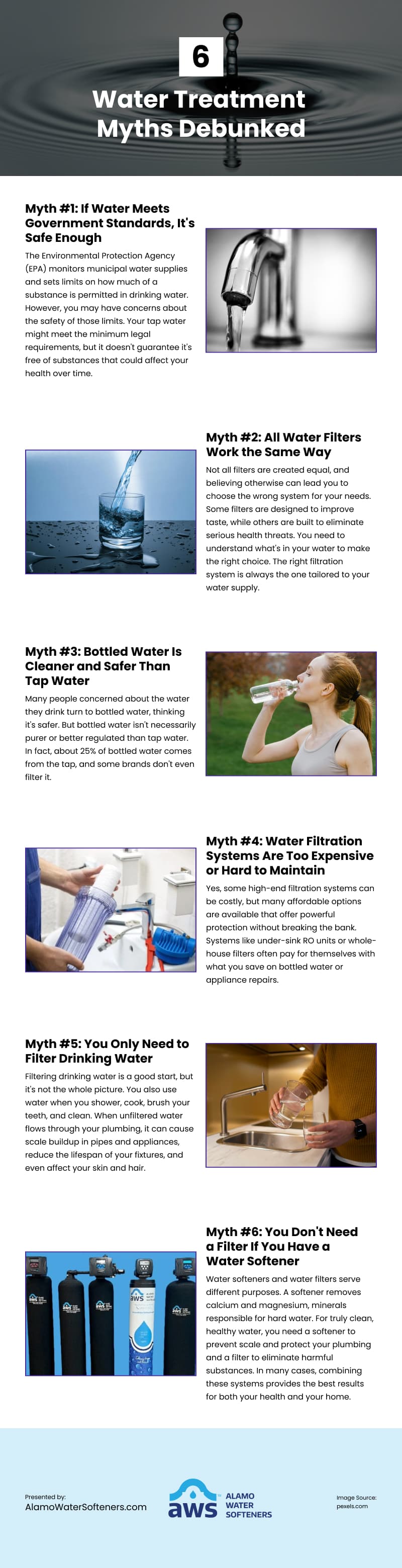
If you’re concerned about your family’s health, you might wonder about the safety of your home’s water. With so much misinformation out there, it’s easy to make incorrect assumptions. This infographic clears up common water myths, enabling you to make healthier choices for your home.